
In a region shaped by coastal moisture, microclimates, seismic soil movement, and seasonal rainfall, Bay Area artificial grass must be engineered to perform as a resilient landscape system rather than a purely visual upgrade. At SYNLawn, we approach turf design with a deep understanding of how environmental forces interact with materials over time, especially in regions where conditions vary dramatically from neighborhood to neighborhood.
The Bay Area presents a unique challenge for outdoor surfaces. Morning fog, coastal humidity, inland heat, and periods of heavy rain all influence how landscapes behave beneath the surface. Turf systems that are not engineered for these variables often struggle to maintain consistency, even if they look appealing at installation. Long-term performance depends on how water, soil, and structure work together after years of exposure.
How Bay Area Conditions Affect Turf Performance
Unlike regions with predictable weather patterns, the Bay Area experiences constant environmental fluctuation. Coastal zones may remain damp for extended periods, while inland areas cycle between dry heat and sudden storms. These conditions place pressure on turf systems in ways that are not immediately visible.
When water enters a turf installation, it must exit efficiently to prevent saturation beneath the surface. Inconsistent drainage can lead to subtle but impactful issues, including surface softness, uneven settling, and reduced stability underfoot. Over time, these changes compromise both function and longevity.
Buyers researching Bay Area artificial turf often encounter products designed for uniform climates that do not account for this variability. Systems that perform adequately in dry regions may struggle when exposed to prolonged moisture or repeated wet-dry cycles.
Why Drainage Strategy Matters More Than Speed Alone
Drainage is frequently discussed in terms of how quickly water can move through a turf system. While speed is important, consistency is far more critical in environments like the Bay Area. Drainage must remain reliable as conditions change and debris accumulates.
Many turf systems rely on narrow drainage pathways that function well initially but become restricted over time. Fine particles from soil, organic debris, and airborne material gradually collect within the backing. As these pathways narrow, water movement slows, increasing moisture retention beneath the turf.
For property owners comparing artificial turf options, understanding how drainage performs over the lifespan of the product is essential. Short-term flow rates do not guarantee long-term reliability.
SuperDrain+ and Long-Term Water Control
SuperDrain+ is SYNLawn’s proprietary drainage technology engineered to provide consistent vertical water movement throughout the life of the turf system. Rather than depending on small perforations that are prone to obstruction, this technology allows water to pass through the backing structure even as environmental debris naturally accumulates.
Independent testing has demonstrated the drainage capability of up to 1,200 inches per hour. While Bay Area rainfall will never reach that level, the excess capacity ensures water does not stagnate or pool beneath the surface. This predictability protects the base layers and supports surface stability across changing conditions. For homeowners and commercial clients seeking artificial grass solutions in moisture-variable environments, controlled water movement is a defining performance factor.
Backing Design and Structural Resilience
Effective drainage must be supported by a backing system capable of maintaining strength and flexibility. EnviroLoc+ is SYNLawn’s proprietary backing technology designed to anchor fibers securely while adapting to environmental stress.
Traditional latex backings can stiffen, crack, or lose integrity when exposed to repeated moisture cycles or temperature shifts. EnviroLoc+ uses a soy-based polyurethane composition that remains flexible without sacrificing durability. This allows the backing to respond to soil movement, including subtle shifts caused by moisture changes or seismic activity.
In the Bay Area, where ground conditions can vary significantly, this adaptability helps maintain surface consistency and fiber stability over time.
How Turf Systems Evolve With Use
One of the most overlooked aspects of turf selection is how systems evolve after installation. Turf systems that lack proper drainage and backing resilience often experience a gradual performance decline. Surfaces may feel less firm, drainage may slow, and wear patterns may become uneven without a single obvious failure point.
SYNLawn turf systems are engineered to reduce these long-term effects. By controlling how water exits the system and reinforcing fiber retention at the backing level, we help preserve performance across years of exposure and use. Property owners considering synthetic grass often recognize the value of this engineering when their landscapes continue to perform consistently long after installation.
Residential and Commercial Applications Across the Bay Area
Residential landscapes benefit from turf systems that remain stable through seasonal changes. Lawns dry efficiently after rain, outdoor living spaces remain usable, and maintenance demands are reduced.
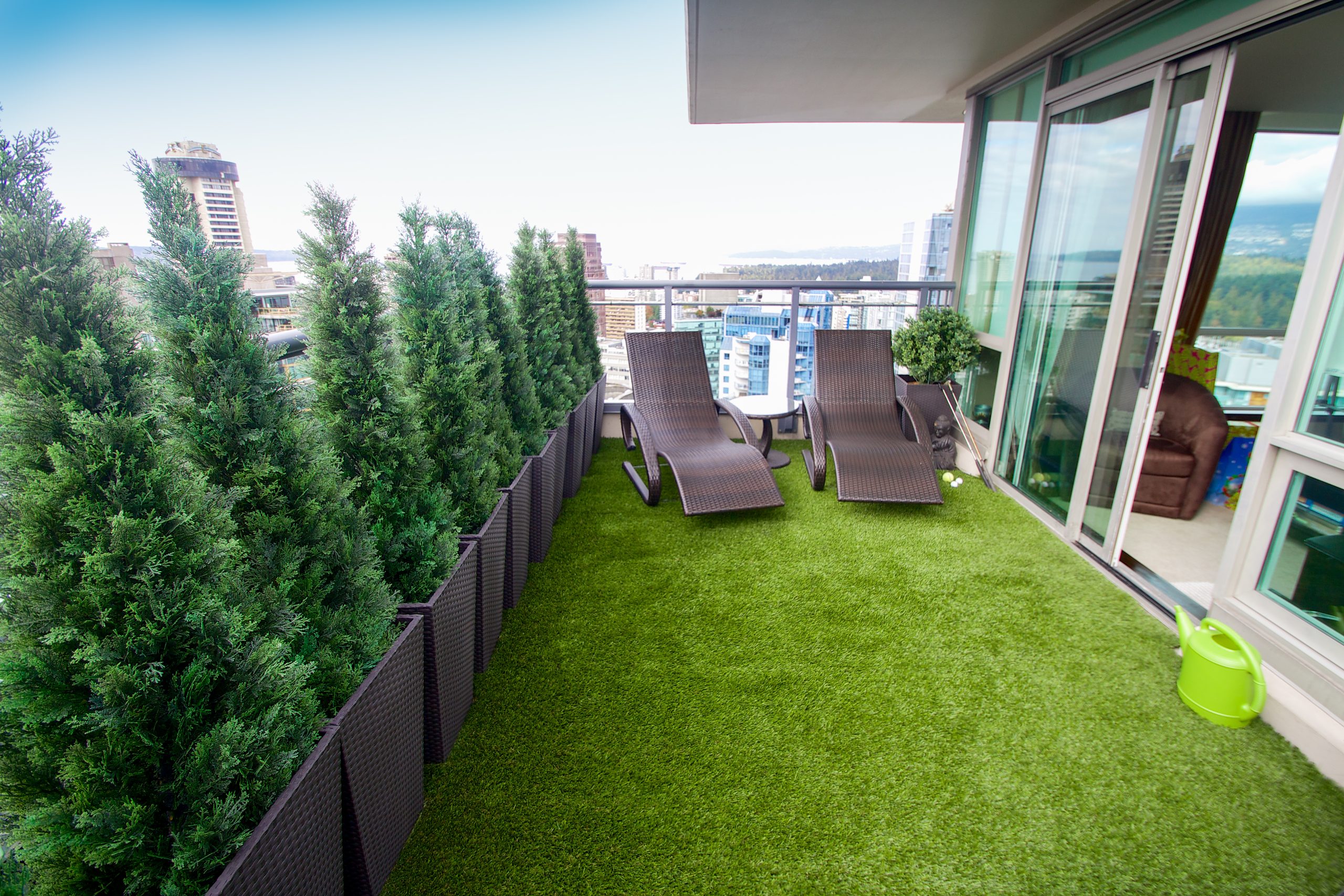
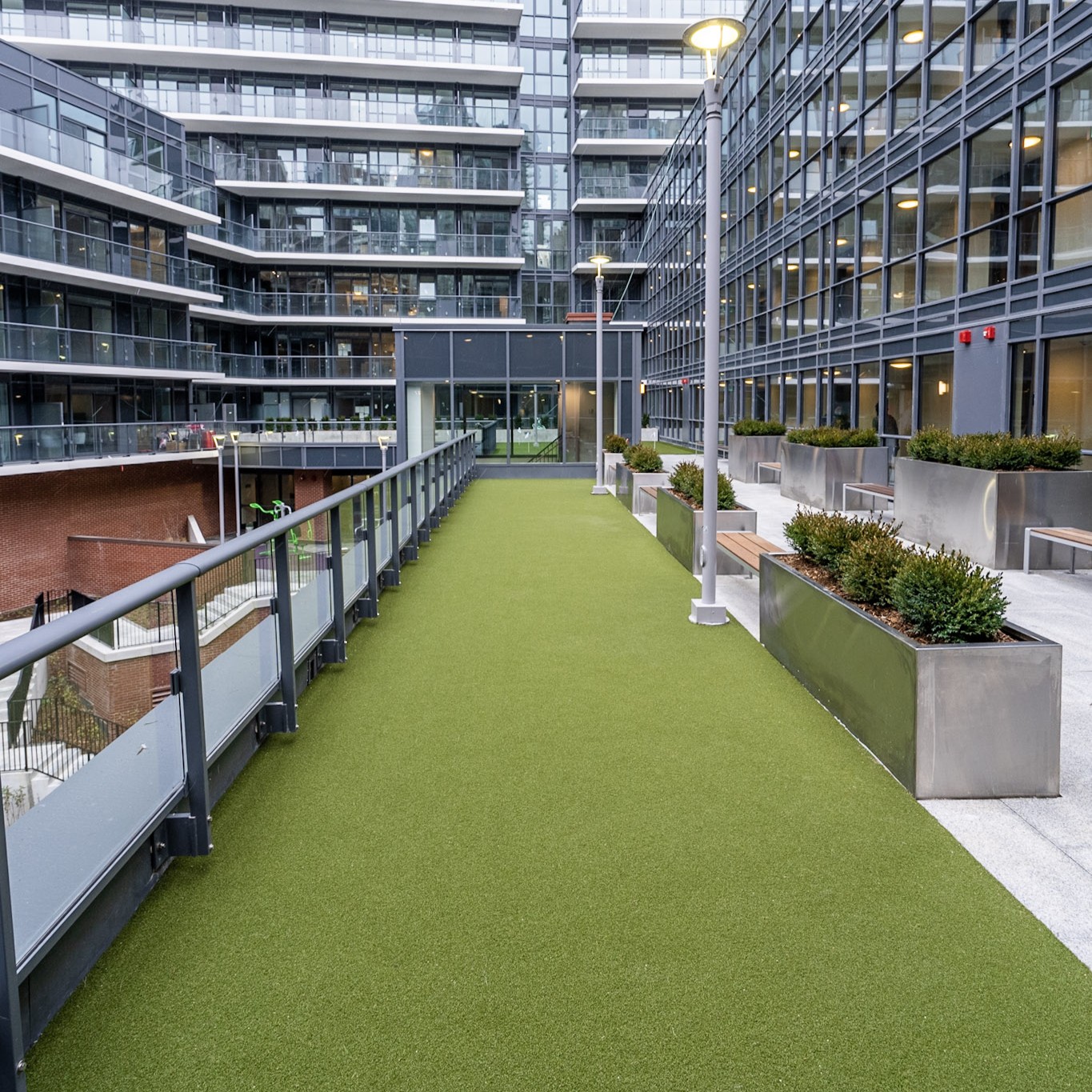
Commercial environments introduce additional stress. Office campuses, hospitality properties, rooftops, and shared outdoor spaces require surfaces that maintain structure under constant foot traffic. Turf systems that struggle with drainage or backing fatigue often show early signs of wear in these settings.
For high-use environments, selecting synthetic turf engineered for long-term performance is essential to avoid premature replacement.
Looking Beyond Visual Descriptors
Some products are marketed primarily on appearance and labeled as faux turf, emphasizing how closely they resemble natural grass. While visual realism matters, it does not determine how a turf system manages water, heat, or structural stress. At SYNLawn, we prioritize engineering over labels. Fiber design, backing composition, and drainage technology are developed to work together as a cohesive system, ensuring consistent performance regardless of application or exposure.
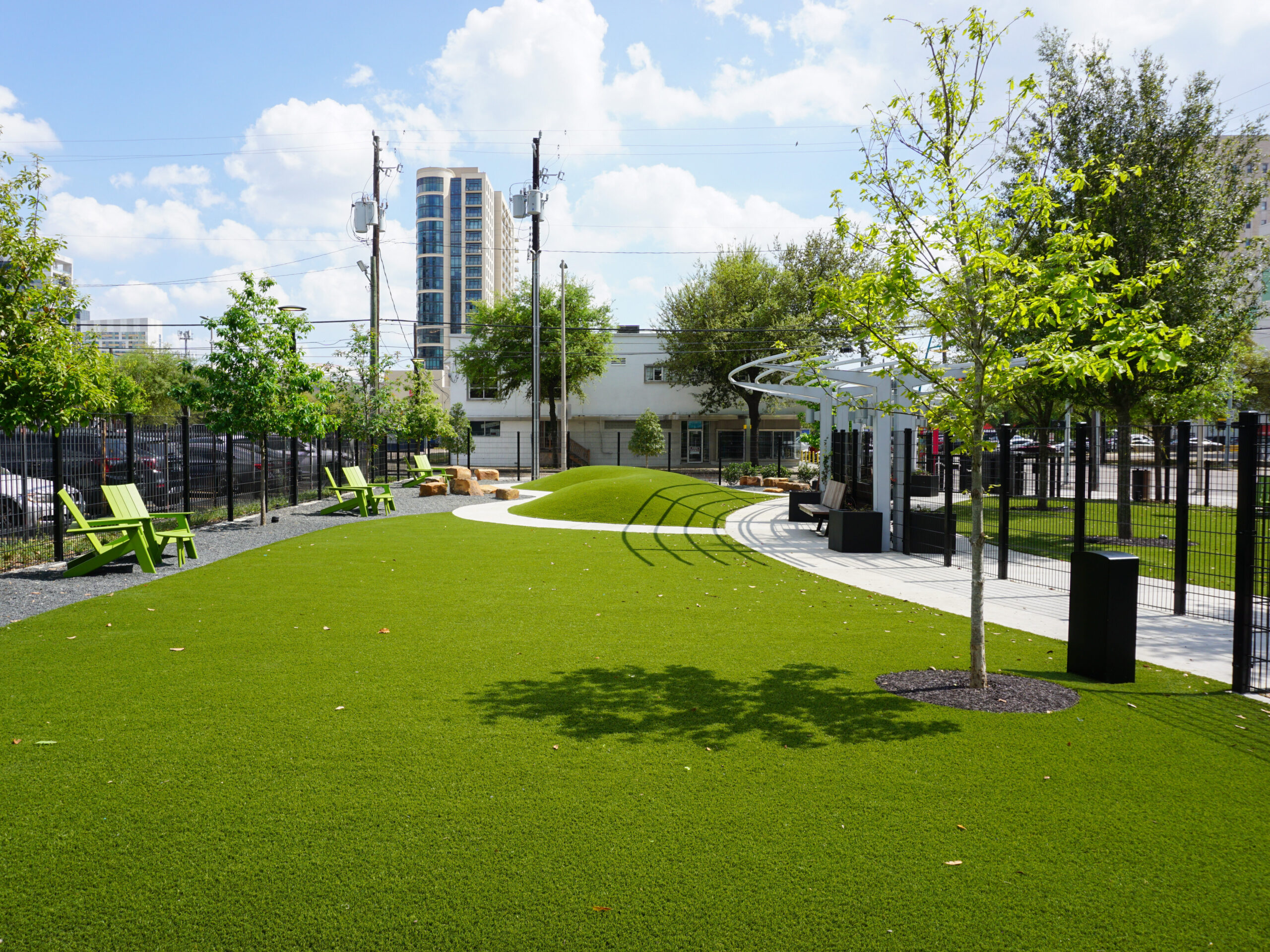
Making an Informed Turf Investment
Choosing turf in the Bay Area requires a deeper understanding of how systems respond to environmental variability. Buyers should evaluate drainage design, backing materials, and whether performance claims are supported by testing. These factors provide a clearer picture of durability and long-term value than surface appearance alone.
Our role at SYNLawn is to provide transparency. By designing turf systems specifically for complex environments, we help buyers make confident decisions that protect their investment.
Download Your Buyer’s Guide Today
A turf system’s success is determined by how well it manages environmental change over time. By prioritizing engineered drainage and resilient backing technology, SYNLawn delivers solutions built to perform across the Bay Area’s diverse conditions. From residential landscapes to commercial applications, our turf systems provide stability, durability, and confidence for anyone choosing Bay Area artificial grass. Click here to receive your free copy of our artificial grass buyer’s guide!